Handle Graveyard: The Slow Erasure of Who We Used to Be Online
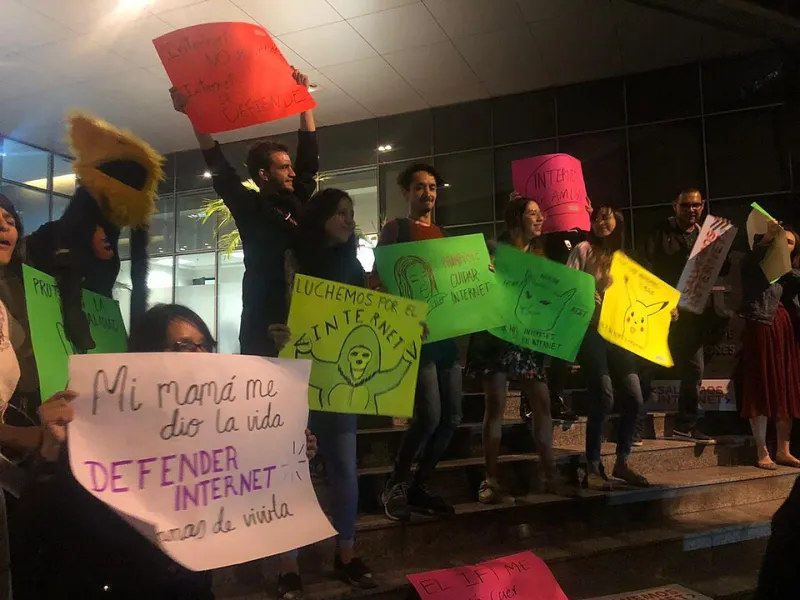
Photo: Claudia WMMX, CC BY-SA 4.0, via Wikimedia Commons
There was a version of the internet where you could be anyone. Not in the catfish sense, not in the scam-artist sense — but in the genuinely liberating sense of picking a name that meant something to you and building a whole digital life around it. You were xX_NightOwl_Xx on one forum, velvetcircuit on another. Each handle was a door you walked through into a different room, a different version of yourself. Then, somewhere around 2011, a handful of powerful platforms decided that was a problem.
The real-name revolution didn't arrive with a manifesto. It crept in through Terms of Service updates and product redesigns. Facebook had always insisted on it. Then Google+ made it a headline policy, famously suspending accounts that used pseudonyms. YouTube tied its comments to Google profiles. LinkedIn turned professional networking into an identity checkpoint. Slowly, the logic spread: if you had to attach your face and your legal name to what you said, you'd behave better. You'd be accountable.
The theory was clean. The reality was messier than anyone at a product meeting wanted to admit.
The Accountability Trap
The argument for real names was always framed around toxicity. Anonymity, the thinking went, was a vector for harassment, bad-faith arguments, and the general chaos of the early internet. If people had to own their words, the reasoning followed, they'd choose those words more carefully.
What that argument quietly ignored was who benefited from anonymity in the first place. LGBTQ+ teenagers in conservative households. Domestic abuse survivors who needed community without being findable. People navigating mental health issues who weren't ready to attach their struggles to a LinkedIn-searchable name. Whistleblowers. Activists in cities where their politics could get them fired — or worse. For these users, a username wasn't a shield for bad behavior. It was a survival tool.
Researchers who studied the rollout of real-name policies found something counterintuitive: harassment didn't reliably decrease. What decreased was participation from vulnerable groups. The people who had the most to lose from forced transparency went quiet. The people with the most social capital — people who could afford to be public — stayed loud. The internet didn't get more civil. It got more homogenous.
What Got Buried
Beyond the safety conversation, there's a cultural loss that doesn't get talked about enough. The handle was an art form. Choosing a username was one of the first acts of self-expression the internet gave ordinary people. You'd think about it. You'd try things out. Some people kept the same handle for fifteen years across a dozen platforms, building a reputation that was theirs in a way their legal name never quite was.
That creative layer got stripped away. Your Facebook profile, your Instagram, your LinkedIn — they all point back to the same person, the same face, the same traceable human being. The mosaic of identities collapsed into a single, searchable, advertisable self. And that self, conveniently, was a much better product for platforms to monetize.
It's worth sitting with that for a second. The shift to real names didn't just change how we talked online. It changed what online spaces were. A forum where everyone is anonymous is a commons. A platform where everyone is identified is a database.
The Resistance Is Already Here
Gen Z didn't accept the bargain quietly. They've been running a quiet counter-operation for years, and it's more sophisticated than most think pieces give them credit for.
Alt accounts — "alts," "finstas," "spam accounts" — became standard practice among younger users almost as soon as real-name pressure intensified. The main account is the performed self, the one for employers and family and the general public. The alt is the real one: the place where you post unfinished thoughts, weird fixations, niche humor that doesn't translate outside your specific micro-community. It's a workaround, but it's also a deliberate reassertion of the idea that you get to control which room you're in and who sees you there.
Beyond the alt-account ecosystem, there's been a genuine revival of spaces where pseudonymity is structural, not just tolerated. Discord servers built around niche interests — obscure music genres, specific aesthetic subcultures, communities orbiting particular games or shows — operate with usernames by default. Reddit, for all its problems, still runs on handles. Certain corners of Tumblr never really left. And there's a whole layer of activity happening on forums and imageboards that the mainstream tech press rarely covers, places where the norm is still that your real name is the last thing anyone wants to know.
These aren't fringe spaces anymore. They're where a significant portion of actual internet culture gets made before it surfaces anywhere else.
The Thread You Can't Fully Trace
There's something almost poetic about the way identity keeps finding cracks in the wall. Every time a platform tries to flatten online selfhood into a single verified profile, something slips through. A new username convention emerges. A new platform launches with different defaults. A community migrates somewhere less surveilled.
The impulse to have a name that's yours — chosen, crafted, separate from the one on your driver's license — doesn't seem to be going anywhere. If anything, the years of forced transparency have made people more conscious of what they gave up. More deliberate about where they show up and as who.
The handle graveyard is real. Millions of usernames are effectively defunct, attached to platforms that demanded more than a name in exchange for access. But the people who used them didn't disappear. They're somewhere in the static, building new rooms, picking new names, threading their way through the parts of the internet that still let them choose.