Never Posted: The Secret Museums People Are Building Inside Their Drafts
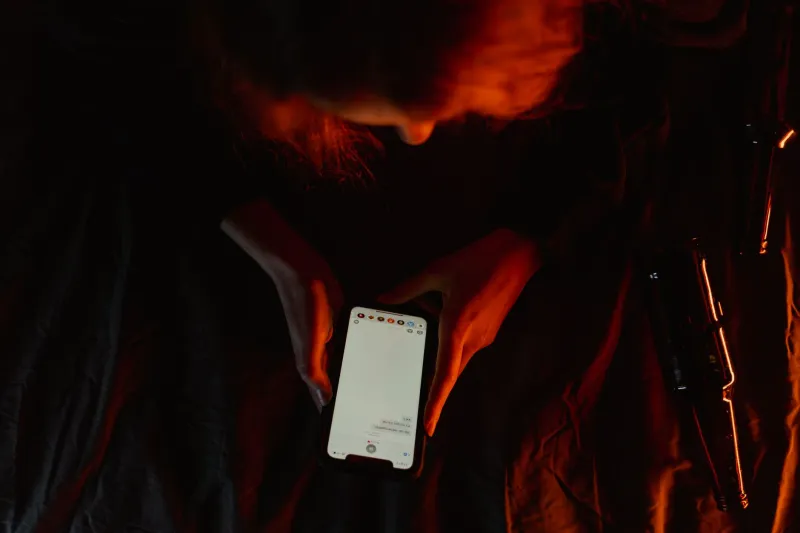
There's a folder most people don't talk about. It's not the photos you've edited into oblivion or the notes app you treat like a confessional. It's the drafts — the half-typed tweets, the Instagram captions that got too honest, the long text messages you composed at 2am and then quietly closed without sending. For a growing number of people, that folder has quietly become something else entirely: a private gallery of the person they almost were.
Nobody built it on purpose. That's sort of the point.
The Accidental Archive
Ask someone to show you their drafts folder and watch what happens to their face. There's usually a pause — something between embarrassment and protectiveness — before they either laugh it off or pull out their phone with the careful energy of someone opening a journal they forgot they kept.
What's inside rarely looks like much from the outside. A string of unsent tweets about an argument that resolved itself. A paragraph of a post that felt too vulnerable by morning. A note that starts with "I've been thinking about" and ends mid-sentence. But for the people who accumulate these things over months or years, the collection starts to feel less like digital clutter and more like evidence — of a self that exists just outside of public view.
Researchers who study online behavior have a term for the gap between what people draft and what they actually post: self-censorship, though that framing kind of flattens what's actually happening. Censorship implies something was suppressed. What lives in most people's drafts isn't suppressed so much as suspended — held in a state between expression and silence, never quite committed to either.
Curation for Nobody
Here's the thing about curation: we usually think of it as something performed for an audience. A museum arranges objects so visitors can make meaning from them. A playlist gets shared. Even a mood board on Pinterest assumes someone might eventually look.
Drafts don't work that way. The audience is, at most, a future version of yourself — and even that's not guaranteed. People describe returning to old drafts the way they describe finding old journals: with a mix of recognition and mild shock at how much they've changed, or how little.
One user on Reddit described their Twitter drafts folder as "a graveyard of takes I was too scared to have." Another called theirs "the only place online where I'm actually honest." There's something in that honesty that feels significant. Stripped of the pressure to perform for followers or fit into an algorithmic feed, the drafts folder becomes a space where people write for the act of writing — and then stop, because stopping is also a choice.
What gets saved and what gets deleted isn't random. People make decisions, even unconsciously, about what's worth preserving in that in-between state. That's curation, even if nobody's calling it that.
Multiple Selves, One Folder
The internet has spent two decades asking people to consolidate themselves into legible profiles — a bio, a handle, a grid, a vibe. The pressure to be coherent online is real and it's exhausting. Your LinkedIn self can't fully coexist with your finsta self, and neither of them is exactly the person texting your best friend at midnight.
Drafts folders are where that pressure releases. They're the space where the version of you that almost said something gets to exist alongside the version that thought better of it. Over time, those layers accumulate into something that looks less like a folder and more like a portrait — not the polished headshot you use for your profile, but the kind of portrait that shows the texture of a face.
Some people describe a kind of intimacy with their own drafts that they don't feel with their public posts. The published stuff belongs to the feed, to the algorithm, to whoever stumbles across it. The drafts belong to them. There's a possessiveness there that's hard to articulate but easy to recognize.
The Psychology of Not Sending
Why do people keep drafts instead of just deleting them? That's the question that gets interesting when you sit with it.
Deletion feels final. Saving a draft, even one you never intend to send, is a way of acknowledging that something happened — a feeling passed through you, a thought formed, a moment existed. The draft is proof. It's a receipt from an experience that otherwise leaves no trace.
There's also something about the act of writing that functions independently of whether anyone reads it. Putting words to a feeling — even in a half-finished way, even in a text box that will never send — does something to the feeling. It organizes it. It makes it slightly more manageable. The draft isn't just a record of what you almost said; it's a tool you used to process something, and maybe that's why throwing it away feels wrong.
Therapists have talked for years about the value of unsent letters — writing to someone you're angry at, or grieving, or in love with, with no intention of sending it. The drafts folder is basically that, but it's been absorbed into everyday digital life so quietly that most people don't recognize what they're doing as a practice at all.
What the Collection Reveals
If you spent an hour reading through someone's drafts — really reading, not skimming — you'd probably learn more about them than their last hundred posts. You'd see the fights they swallowed, the jokes that didn't land even in their own head, the earnestness they couldn't quite make public. You'd see the version of them that exists before the edit.
That's uncomfortable to think about, which might be why the drafts folder stays private even when everything else is technically shareable. People are protective of their unfinished selves in a way they're not protective of their curated ones. The polished profile can go anywhere. The drafts stay home.
There's something almost radical about that, in a culture that treats sharing as the default. The drafts folder is one of the last places online where the act of not publishing is the point — where the collection exists entirely outside of engagement metrics, likes, and reach. Nobody's watching. Nobody's meant to.
And yet the collection grows. Quietly, without intention, without an audience. A museum nobody visits, curated by someone who can't quite stop adding to it.
Maybe that's the most honest thing any of us make online.