Spit in a Tube, Lose a Secret: The Hidden Cost of Knowing Where You Came From
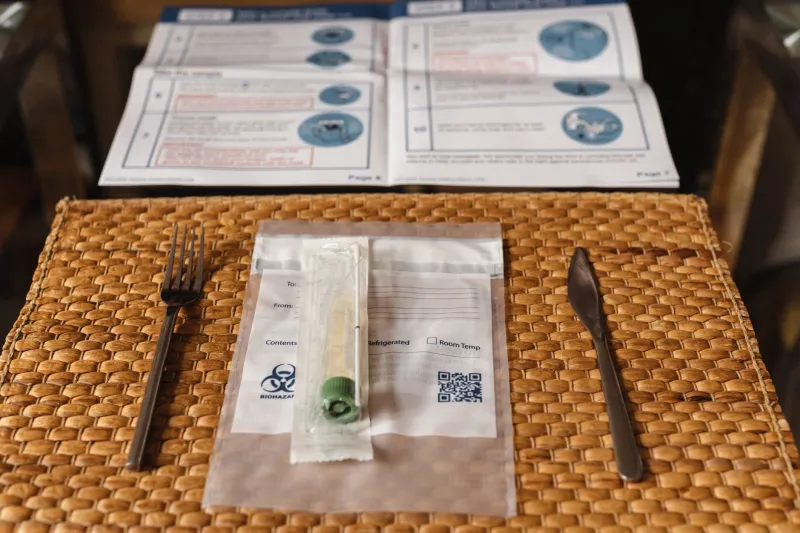
There's something almost ritualistic about it. You order the kit. It arrives in a slim cardboard box, clinical and cheerful at the same time. You follow the instructions, seal the tube, drop it in the mail. A few weeks later, a dashboard populates with percentages and distant cousins and a map that tells you this is where your people came from. For a moment, it feels like pulling back a curtain.
What nobody really talks about is what's standing on the other side.
The Promise That Got Everyone Hooked
Genealogy platforms like AncestryDNA, 23andMe, and MyHeritage have collectively gathered biological data from tens of millions of Americans. The pitch was always warm and human — find your roots, connect with lost relatives, fill in the blank spaces on the family tree. And for a lot of people, it delivered exactly that. Adoptees found biological parents. People learned about medical risks written into their chromosomes. Families scattered across continents found each other again.
But the architecture underneath that warm pitch is something else entirely. What you're actually doing when you mail that tube is feeding your most irreducible personal data — the literal code that makes you you — into a private database controlled by a corporation. And unlike a password you can reset or an email address you can abandon, you cannot unsubmit your DNA. There is no delete button that actually works on biology.
The Cousin You Didn't Know Was Looking
Here's where it gets strange. Even if you personally never signed up for a single one of these platforms, your genetic information might already be partially visible inside them — because someone you're related to did. DNA is shared. When your second cousin uploads their results, they're not just exposing their own genome. They're casting a shadow of yours.
This is the thing genealogy companies don't lead with in their marketing: the database doesn't just know about the people who opted in. It knows through them. Researchers have estimated that a database containing only a few million people can effectively identify a large portion of the broader population through genetic proximity. The veil was never really there to begin with.
And people are finding things they weren't looking for. There are entire online communities — Reddit threads, private Facebook groups, niche forums — built around what genealogists call "NPE" discoveries: Not Parent Expected. Someone runs a test hoping to confirm Irish ancestry and instead finds out their dad isn't their biological father. Someone discovers a half-sibling who has been living forty minutes away their entire life. These aren't edge cases anymore. They're common enough that therapists have started specializing in DNA surprise counseling.
Law Enforcement Found the Backdoor
The genealogy database became a crime-solving tool almost by accident. The case that broke into mainstream awareness was the 2018 arrest of Joseph James DeAngelo, the Golden State Killer, who had evaded capture for decades. Investigators uploaded crime scene DNA to GEDmatch, a free genealogy platform, built a family tree from distant relatives who appeared in the results, and worked backward until they had a name.
It worked. And then law enforcement realized it could keep working.
Since then, this technique — called investigative genetic genealogy — has been used in hundreds of cases across the country. Some of those cases involved violent crimes. Others involved far less serious offenses. The legal framework governing when and how police can access these databases is still catching up, patchwork at best. GEDmatch updated its terms of service to make law enforcement opt-in rather than opt-out after user backlash, but the broader question of what happens when governments subpoena DNA companies directly remains largely unresolved.
23andMe, for its part, has faced that question directly. The company filed for bankruptcy in 2025 after a massive data breach exposed the personal information of millions of users. The breach didn't just expose names and email addresses — it exposed genetic ancestry data, family networks, health predispositions. The kind of information that, once out, has nowhere to go but further out.
Data Brokers Are Already at the Party
Beyond law enforcement, there's a quieter and arguably more pervasive problem: the commercial data ecosystem that treats your biological information as a product category.
Genealogy companies generate revenue through subscriptions, but also through research partnerships, pharmaceutical licensing deals, and data agreements that users technically consent to through terms of service documents that almost nobody reads in full. Your anonymized genetic data — or what's described as anonymized — can be pooled and sold to research institutions, insurance-adjacent companies, and biotech firms building datasets for drug development.
"Anonymized" is doing a lot of heavy lifting in that sentence. Researchers have repeatedly demonstrated that genetic data is extremely difficult to truly de-identify, because the genome itself is a unique identifier. You are your DNA in a way that you are not your IP address.
The Desire That Made It All Possible
None of this happened because people were careless or naive. It happened because the desire to know where you come from is genuinely powerful. It's one of the more deeply human impulses there is — the need to locate yourself in a longer story, to feel like you're part of something that existed before you and will continue after. Genealogy companies understood that desire and built products around it that were genuinely compelling.
The tension at the center of this whole thing is real and uncomfortable: the same act of reaching toward your past can expose your present, and the present of everyone genetically connected to you, in ways that are almost impossible to fully anticipate. You pull one thread looking for your great-grandmother's village in County Cork and you end up unraveling something else entirely.
What You're Actually Signing Up For
If you've already done it, the options are limited but not zero. Most major platforms allow you to delete your account and request destruction of your physical sample, though the data derived from that sample may already exist in research datasets. You can opt out of research use in your account settings, though the defaults are often set against you. You can download your raw data before deleting, which at least gives you some ownership of what you've generated.
If you haven't done it yet and you're still curious: that's a legitimate choice. But go in knowing what the transaction actually is. You're not just buying a percentage breakdown and a map. You're contributing to a living archive that is simultaneously a product, a law enforcement resource, a research dataset, and a family secret waiting to happen.
The veil lifts both ways. That's the part they leave out of the commercial.