Stitching the Void: The Obsessives Who Rebuild What the Internet Was Told to Forget
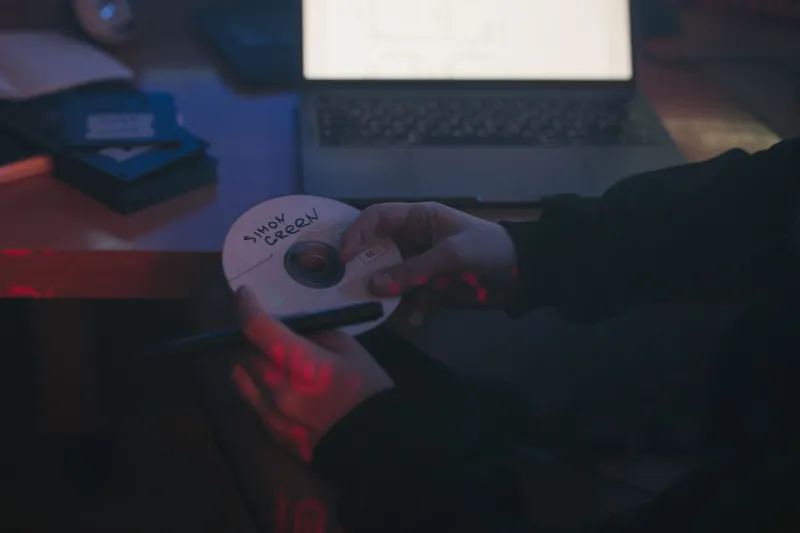
There's a particular kind of satisfaction that comes from finding a thing that was supposed to disappear. Not stolen, not leaked — just found, reassembled from the digital equivalent of torn-up paper. A cached page here. A Wayback Machine snapshot there. A screenshot somebody took in 2017 and never thought twice about uploading to a fan account. Put it all together and you've got something that looks a lot like a complete picture of a person who spent considerable effort making sure you wouldn't have one.
This is what timeline reconstructionists do. And depending on who you ask, they're either the last honest librarians on the internet or the creepiest people in any given Discord server.
The Archaeology of the Almost-Erased
The tools aren't secret. The Internet Archive's Wayback Machine has been crawling and preserving web pages since 1996, and any reasonably determined person can punch in a URL and scroll through years of cached snapshots. Google's cache, while increasingly unreliable as the company phases it out, still occasionally surfaces recent versions of pages. Then there are third-party archivers — archive.ph, CachedView, Oldweb.today — each with slightly different coverage gaps and strengths.
But the real work, practitioners will tell you, happens at the human layer. The Wayback Machine doesn't catch every post. Crawlers miss things, especially content behind logins or on platforms that actively block archiving bots. That's where the community fills in. Forum threads. Fan wikis. Personal screenshot folders that somebody maintained for years because they thought a particular creator was interesting and figured, you know, just in case.
"Just in case" turns out to be a surprisingly common archival philosophy.
In certain corners of Reddit and a handful of Discord servers that don't advertise themselves, there are ongoing collaborative projects aimed at reconstructing the complete posting histories of specific public figures — streamers who nuked their early content, influencers who rebranded after controversy, musicians who deleted parasocial-era tweets before getting famous. The methodology is genuinely painstaking. Gaps get flagged. Sources get cross-referenced. Someone will post a screenshot and three other people will argue about whether the metadata lines up with the timestamp.
It has the texture of historical research. It just happens to be about a 28-year-old who used to be extremely online about their personal life and now has a PR team.
Why Bother?
Ask the people doing this why it matters and you'll get a range of answers that reveal how varied the motivations actually are.
Some frame it as straightforward accountability. Public figures shape narratives. If someone built a following saying one thing and now says another, the delta between those two positions is information. Journalism has always operated on the principle that what powerful people say — and when they said it — is fair game. The fact that the platform made it easy to delete doesn't change the underlying logic.
Others are less ideological about it. They're completionists in the way some people are about vinyl discographies or box scores. There's a gap in the record and the gap bothers them. The reconstruction is the point, not the content inside it. One person described it to me as "basically the same as restoring an old photograph — you're not making anything new, you're just refusing to let the damage win."
And then there's a smaller contingent who are, if we're being honest, running on something closer to obsession than principle. The subject doesn't have to be famous. Some of these projects target mid-tier internet personalities with a few thousand followers — people who went quiet, deleted everything, and disappeared. The reconstructionists follow anyway.
The Part Where It Gets Uncomfortable
Here's the thread that snags: not everyone who deletes their posts is trying to hide something worth exposing. Some people are just trying to leave.
Privacy researchers have a term for this — the "right to be forgotten" — and it's been legally codified in the EU in ways it hasn't in the US. The idea is that individuals should have some meaningful control over their own digital histories, that a 22-year-old's public mental health spiral shouldn't follow them forever just because it happened to occur on a platform with public posts.
Timeline reconstruction, in its more aggressive forms, is basically the technical negation of that right. Every cache pulled, every screenshot surfaced, every collaborative thread filling in the gaps — it's infrastructure built specifically to defeat someone's attempt to move on.
The community isn't unaware of this tension. There are ongoing, genuinely heated arguments about which subjects are fair targets. Most people draw a line at private individuals. Many draw a line at mental health content even for public figures. Others argue that the line should be determined entirely by platform settings at the time of posting — if it was public, it was public, and the archive is just honoring that.
Nobody's arrived at a consensus, because there isn't one available. The ethics here don't resolve cleanly.
The Thread You Can't Unfollow
What's strange about spending time in these communities is how careful most participants are about framing. They don't tend to talk like stalkers. They talk like archivists, like journalists, like people who've thought seriously about why the historical record matters and why impermanence is a kind of lie the internet tells about itself.
And they're not entirely wrong. Platforms do disappear. Servers go down. Companies get acquired and content gets nuked in bulk. The Wayback Machine exists because a lot of people recognized early that the web was eating itself — that without deliberate preservation, huge chunks of internet history would simply vanish. That instinct isn't pathological. It's actually kind of responsible.
The thing that makes timeline reconstruction feel different is the specificity. It's not "preserve the web" in the abstract — it's this person, this account, this particular history they tried to close the door on. The motivation stops being archival and starts being something harder to name.
Maybe the most honest way to describe it is this: the internet created a culture where visibility was currency, where the archive of your public self was a kind of proof of existence. And then it gave individuals just enough tools to erase themselves that erasure started to feel like power. Timeline reconstructionists are, in part, a reaction to that power — a community that formed specifically to complicate the idea that deletion is final.
Whether that's a public service or a slow violation probably depends on whose timeline you're stitching back together.