Everything Is a Clue If You Look Long Enough: The Communities Decoding the Noise
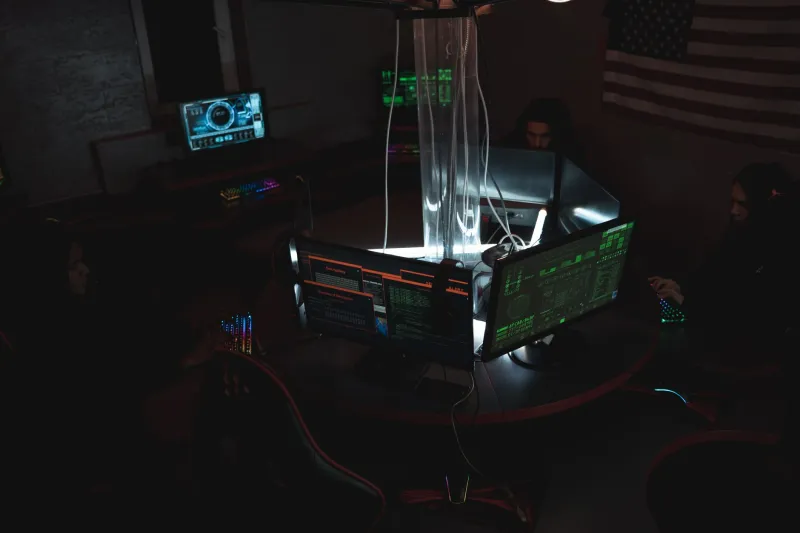
Somewhere between the third and fourth paragraph of a routine Apple software update log, a user who goes by pellucid_static noticed something. A version number formatted slightly differently than the ones before it. A word choice that didn't match the company's usual tone. A timestamp that, when converted to coordinates, landed somewhere in Iceland.
They posted about it. The thread exploded.
This is the world of the breadcrumb theorists — a loose, overlapping constellation of online communities whose central belief is simple and kind of intoxicating: the mundane digital world is hiding something, and if you pay close enough attention, you'll start to hear it.
The Texture of Ordinary Data
Most of us move through digital life treating corporate communications like wallpaper — functional, forgettable, designed to be ignored. Press releases. Patch notes. Terms of service updates. Quarterly earnings transcripts. These documents exist to be filed, not read.
But for a certain kind of person, that invisibility is exactly what makes them interesting.
"Nobody looks at a changelog," explains one moderator of a forum dedicated to what its members call "signal archaeology." "That's the point. If you wanted to hide something in plain sight, you'd hide it in the thing no one reads."
The communities built around this idea range from the tightly organized to the completely chaotic. Some operate like research collectives, with spreadsheets, citation standards, and designated skeptics whose job is to poke holes in every new discovery. Others are looser — more vibe than methodology — where half the posts are speculative and nobody's too concerned about proof. What they share is the orientation: a refusal to accept that ordinary data is just ordinary.
Easter Eggs and the Gateway Drug
For a lot of members, the entry point was legitimate. Software Easter eggs — those intentional hidden features and jokes that developers embed in products for the sheer delight of it — have existed since the early days of computing. The Atari 2600 game Adventure famously hid the developer's name in 1980. Microsoft Excel once contained a hidden flight simulator. These are documented, confirmed, real.
And they rewired how a generation of curious users thought about digital products.
"Once you know that developers do this on purpose," one longtime community member wrote in a post that's been screenshotted and reshared dozens of times, "you can't unknow it. Every piece of software becomes a potential message."
From there, the scope tends to expand. First it's hidden developer credits. Then it's unusual metadata embedded in image files. Then it's the spacing of bullet points in a corporate memo. Then it's the precise wording of a CEO's public statement, parsed for double meanings. The ladder goes down a long way.
Real Patterns and the Apophenia Question
Here's the uncomfortable thing that most serious members of these communities will acknowledge, at least in private: the human brain is a pattern-finding machine that doesn't know when to stop.
Apophenia — the tendency to perceive meaningful connections between unrelated things — is the psychological concept that shadows every thread in these spaces. It's why we see faces in wood grain and hear words in white noise. It's also why a randomly formatted version number can look, to the right eyes, like a deliberate signal.
The communities handle this in different ways. Some lean into it openly, treating pattern-finding as a kind of creative practice rather than a truth-seeking exercise. "We're not journalists," one user wrote. "We're more like... collaborative fiction writers who use real data as source material."
Others push back hard on that framing, insisting that at least some of what they find is real — and pointing to cases where they were right. There are documented instances of companies embedding deliberate clues in public materials: ARGs (alternate reality games) that major studios have used as marketing, recruitment puzzles hidden in job postings, developer in-jokes confirmed after the fact by the people who put them there.
The problem is that confirmed cases make the unconfirmed ones feel more plausible. Every real Easter egg is fuel for a hundred false positives.
The Methodology Wars
Inside these communities, there's a persistent tension between the rigorous and the romantic.
On one side, you have members who demand sourcing, cross-referencing, and falsifiability. They build databases. They track prediction records. They're quick to call out confirmation bias when someone decides a pattern is meaningful because it feels meaningful.
On the other side are the people who think that level of skepticism misses the whole point. For them, the search itself is the thing. The act of looking closely at data that everyone else ignores — of treating a software changelog like it might be a poem — is valuable regardless of what you find. It's a way of paying attention in a world that's constantly trying to automate your attention away from you.
"The algorithm wants you to look at what it shows you," one forum post read. "We look at the edges. The margins. The stuff that fell off the bottom of the feed."
There's something almost meditative about that framing, even if it can tip into something darker. A few of these communities have slid toward territory that looks uncomfortably like conspiracy thinking — finding patterns in data not because the data is interesting but because the patterns confirm a pre-existing suspicion about who's hiding what and why. The line between "curious" and "certain" is thinner than it looks from the outside.
What They're Actually Building
Separate from the question of whether any given pattern is real, there's something genuinely interesting happening in these spaces at a craft level.
The better communities have developed sophisticated close-reading skills applied to sources that almost nobody else bothers to read closely. They've built shared vocabularies for talking about data texture, anomaly types, and signal confidence. Some of them are, quietly, pretty good at noticing things — not because the things they notice are always meaningful, but because sustained, careful attention to overlooked material occasionally surfaces something that actually matters.
A few members have parlayed the skills into adjacent fields: information security, UX research, data journalism. The habit of treating ordinary documents as potentially extraordinary turns out to be useful in contexts where the hidden thing is a bug, a bias, or a buried disclosure rather than a secret message.
And then there are the ones who are just in it for the feeling.
The feeling of standing in front of a wall of noise and hearing something. Of pulling a thread and watching the fabric shift. Of being the person who looked where nobody else thought to look.
Maybe that's enough. Maybe the pattern doesn't have to be real to be worth finding.
pellucid_static never did figure out what the Iceland coordinates meant. The thread is still open. People are still adding to it.