When the Algorithm Found the Underground: How TikTok Ate Your Subculture
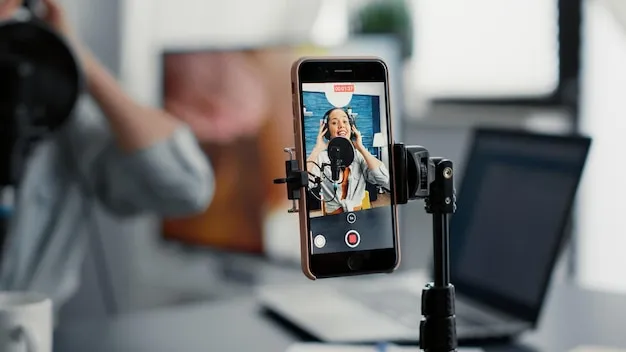
Photo: phone screen TikTok trending content creator filming aesthetic video, via img.freepik.com
Somewhere right now, there's a small corner of the internet doing something genuinely weird and interesting. Maybe it's a music micro-genre that twelve hundred people care about with a devotion that borders on religious. Maybe it's a hyperlocal meme format that only makes sense if you grew up in a specific mid-size Rust Belt city. Maybe it's a fashion aesthetic that exists almost entirely in a handful of Tumblr archives and one extremely active Discord.
And somewhere, a TikTok creator is about to find it.
What happens next has become one of the defining cultural dynamics of the 2020s — a cycle so predictable that the communities living through it have started naming it, tracking it, and in some cases, trying to build defenses against it. The acceleration of niche-to-mainstream isn't new, but TikTok's For You Page has turned it into something closer to a industrial process.
The Old Cycle, Running at New Speed
Subcultures have always fed the mainstream. That's not a TikTok invention. Punk became new wave became pop. Hip-hop traveled from the South Bronx to every suburb in America. Skateboarding went from parking lots to the Olympics. The pipeline from underground to overground has always existed.
What's changed is the timeline. What used to take years — sometimes a decade or more — now happens in weeks. A sound gets used in a viral video. The sound gets used in ten thousand more videos. A brand notices. A celebrity posts. A trend piece runs in a major outlet. And somewhere in that chain, the thing that made the original interesting gets quietly left behind.
Jordan, who runs a small online community dedicated to a strain of ambient electronic music that developed out of early 2010s Soundcloud, watched this happen in real time last year. "There's this very specific feeling the music has — it's rooted in a whole set of references, a whole way of thinking about sound," he says. "When clips started showing up on TikTok, they were being used as background for completely unrelated content. The music became wallpaper. The context just... evaporated."
The Aesthetics Survive. The Meaning Doesn't.
This is the pattern that keeps repeating: the visual or sonic surface of a subculture travels extremely well. The underlying meaning doesn't.
Take the arc of "dark academia" as an aesthetic. The original online communities — built on Tumblr, nurtured in niche corners of Pinterest and early Instagram — had a genuine ethos. It was about a particular relationship to learning, to melancholy, to literary tradition. The thrift store cardigans and the candlelit reading sessions weren't just a look; they were a language.
By the time dark academia hit mainstream TikTok, it had been reduced to a shopping list. Plaid blazer. Vintage tote bag. Oxford shoes. The mood board survived the journey. The substance of what the mood board was pointing at didn't make the trip.
Mara, a creator who built an audience in early dark academia spaces, describes watching the aesthetic get "skinned." "It's like someone took the outside of the thing and wore it as a costume. Which, fine, aesthetics are for everyone. But then the people who were actually inside the community started getting drowned out by the costume-wearers, and suddenly we were the weird ones for caring about the actual content."
The Visibility Trap
Here's where it gets complicated, and where the easy narrative of "mainstream bad" starts to fall apart a little.
Exposure isn't nothing. The ambient music Jordan cares about has found listeners it never would have reached otherwise. Some of those listeners went deeper — found the original communities, engaged with the actual history of the genre, became genuine participants rather than passive consumers. The pipeline flows both ways, sometimes.
But the ratio is brutal. For every person who follows the thread from the viral TikTok back to the source, there are hundreds who consume the surface and move on. And the sheer volume of casual engagement can overwhelm a small community's ability to maintain its own identity. When your Discord server goes from three hundred members to thirty thousand in a month, the culture of that server doesn't scale with it.
"There's a version of visibility that's actually just noise," says Dani, who moderates a community built around a hyperlocal meme format from their hometown. "When the meme went viral, people started using it completely wrong — like, without understanding what it was referencing. And then the wrong version became the dominant version. The original got buried under its own popularity."
The Countermoves
Some communities have started building in deliberate obscurity as a defense mechanism. Invite-only servers. Terminology that functions as a shibboleth — if you don't know what it means, you're not in the circle. Content that's intentionally opaque to anyone without the context to decode it.
There's something almost poignant about communities engineering their own illegibility to protect what makes them worth finding in the first place. It's a kind of cultural self-preservation that runs completely counter to the platform logic that everything should be shareable, searchable, and optimized for reach.
Other communities have made peace with the cycle by distinguishing between what's shareable and what's sacred. The surface goes to TikTok. The substance stays in the server.
What Gets Buried
The thing that gets lost — consistently, across genres and aesthetics and microcultures — is context. The history of how something developed. The inside references that only make sense if you were there for the earlier versions. The interpersonal relationships between creators that shaped what the community actually was.
Viral content is inherently decontextualized. It travels precisely because it doesn't require any prior knowledge to consume. And when decontextualized versions of a thing become the dominant version, the context doesn't just become invisible — it becomes actively inaccessible to the new audience, who have no idea there's a deeper layer to find.
The signal is still there, buried under the trending noise. But you have to want to dig for it.