Flip Phone Cosplay and the Myth of Unplugging
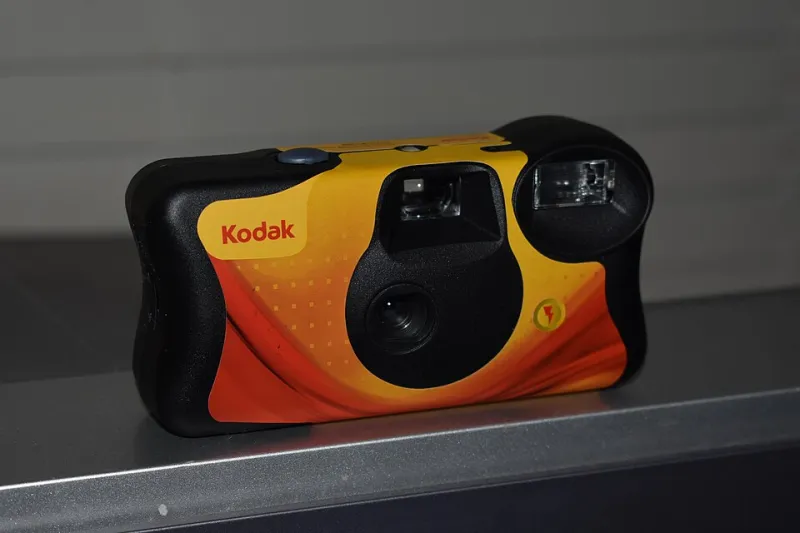
Photo: Matthew Paul Argall from Australia, CC BY 2.0, via Wikimedia Commons
Somewhere in a Brooklyn apartment, someone is loading a disposable camera they bought for fourteen dollars at a drugstore. They'll shoot the whole roll over a weekend, drop it off for development, wait a week, and post the scanned prints to their Instagram grid, slightly washed out, slightly grainy, timestamped in that orange Fujifilm font. The irony is visible from orbit. And yet, somehow, it doesn't feel ironic at all — at least not to them.
This is the texture of a specific cultural moment happening right now among Millennials and Gen Z in the US, a moment where the aesthetic of low-tech living has become one of the dominant visual languages of youth culture. Flip phones. Cassette tapes. Film cameras. CRT-filtered photo apps. Chunky MP3 players. The whole retro-tech catalog has been pulled out of thrift stores and nostalgia bins and reassembled into something that reads, at first glance, like a rejection of the hyper-connected present.
The question worth asking — the one that gets uncomfortable fast — is whether any of it actually is.
The Look of Disconnection
Let's start with what's actually happening on the surface, because it's genuinely interesting before you get to the complications. A measurable number of young people have downgraded their smartphones, or at least claim to. The Light Phone, a minimalist device that does almost nothing, has developed a cult following. Motorola re-released a Razr flip phone and it sold. Basic Nokia bricks show up on TikTok as lifestyle accessories.
Disposable cameras have become a staple at concerts, parties, and friend gatherings — not as a practical tool but as a social ritual. There's something about the physical act of pointing a cheap plastic camera at your friends, knowing you only have 27 frames, that feels meaningfully different from the infinite scroll of your phone's camera roll. The constraint is the point.
And that's where the genuine appeal lives. These objects offer something that modern devices structurally cannot: finitude. A disposable camera runs out. A cassette tape ends. A flip phone's tiny screen and T9 keyboard make extended scrolling basically impossible. For people who grew up with the bottomless feed — the slot machine that never stops — there's something almost physically relieving about a technology that has an edge.
Nostalgia for a Time You Didn't Live Through
Here's where it gets psychologically interesting. A significant chunk of the people most visibly into retro-tech aesthetics are too young to have meaningful memories of the original versions. Gen Z kids posting lo-fi film photos weren't actually there for the era of disposable cameras as a default. They're not revisiting something they lost. They're constructing a relationship with a past they mostly know through media — through their parents' photo albums, through early-2000s movies and TV, through the visual grammar of nostalgia itself.
That's not a criticism. It's actually a fascinating cultural mechanism. What these younger users seem to be reaching for isn't the specific past of the early 2000s so much as the feeling of a world where your phone wasn't also your surveillance device, your employer's after-hours leash, your dopamine dispenser, and your permanent public record. The flip phone isn't really about the flip phone. It's about the version of daily life that a flip phone implies — one where you were reachable but not available, where the technology served you rather than the other way around.
Performance vs. Practice
The harder conversation is about what happens when the aesthetic of unplugging gets fully absorbed into the attention economy it's supposedly rejecting. And it has. Completely.
"Analog living" content is enormous on TikTok and Instagram. Accounts dedicated to film photography, vintage tech hauls, and "dumbphone" lifestyle content rack up serious engagement. The disposable camera gets shot, developed, scanned, and posted. The flip phone gets unboxed on YouTube. The whole movement has become, in a very real sense, content.
This isn't unique to this particular trend — every subculture eventually becomes visible enough to be commodified, and visibility happens through the same platforms the subculture is supposedly pushing back against. But the loop here is especially tight. The performance of disconnection requires an audience, and the audience lives on the connected platforms. You can't really go viral for logging off.
There's a term that gets used in these conversations — "performative luddism" — and while it's often deployed as a dismissal, it's worth taking seriously rather than just using as a dunk. Almost all cultural behavior is performative to some degree. The question isn't whether something is performance, it's whether the performance does anything, whether it changes how you actually move through the world.
What It Actually Reveals
Strip away the aesthetics and the content-creation layer and what's left is something real: a generation that has grown up with an unprecedented level of surveillance built into their social lives and is actively, if imperfectly, looking for exits. The data-harvesting infrastructure of modern smartphones — the location tracking, the behavioral profiling, the way every tap and scroll gets fed into an advertising machine — is something that a lot of young people are at least vaguely aware of, even if they don't have the vocabulary to fully articulate it.
The retro-tech trend is one expression of that awareness. It's not a clean solution. A disposable camera posted to Instagram doesn't actually reduce your exposure to surveillance capitalism in any meaningful way. But as a signal — as a way of saying that the current arrangement feels wrong, that something has been lost, that you want a different relationship with your devices than the one the platforms have designed for you — it lands.
Veilthread has been watching these kinds of micro-movements for a while now, the places where aesthetic choices start carrying more weight than their surface suggests. The flip phone as fashion statement is silly, yes. But the longing underneath it isn't. People are genuinely trying to find the edge of the feed, the place where the algorithm's reach gets thin. They're just doing it with a camera that costs fourteen dollars and still needs to be posted online to count.